LAUREL & HARDY’S CO-STARS


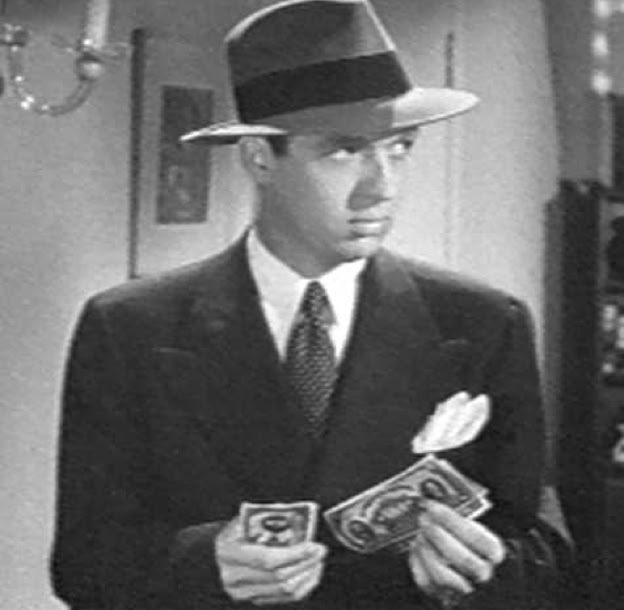
‍EDWARD EARLE

‍Edward Earle is another of the movies’ most prolific character actors. He appears (just barely, among the crowd) in two of Laurel & Hardy’s Hal Roach features, Babes in Toyland and The Bohemian Girl, and in slightly larger roles in Great Guns (as an Army officer refereeing the war games), The Dancing Masters (as the airline ticket agent who politely but firmly cancels a reservation), and Nothing but Trouble (in the employment-agency scene, desperately seeking a servant).

‍Born July 16, 1882 in Toronto, Ontario, Canada, Edward Earle established himself as a dramatic actor on the stage. He entered films in 1915 as a juvenile with the Vitagraph and Famous Players (later Paramount) companies, and co-starred with Agnes Ayres in a series of O. Henry stories. 

‍In 1923 Edward Earle was starring in films produced in Massachusetts, at the long-obscure Atlas studio in Newton. He is one of only two Atlas players who went on to long Hollywood careers (the other was Harriet Krauth, who became a character actress at Paramount under the name Jean Fenwick). For more information about the Atlas studio, see the featured article on this website.

‍Although Edward Earle had been a leading man, his tall frame, craggy face, and reserved manner served him better in character roles. He was featured in Buster Keaton’s last silent feature, Spite Marriage, as Buster’s dignified rival. Five years later his small role as Shirley Temple’s father in Little Miss Marker got him noticed by the movie studios. From then on he worked in every type of movie fiction: A pictures, B pictures, westerns, shorts, and serials. 

‍Edward Earle’s stock-in-trade was dignity. He usually played clerks, bankers, doctors, lawyers, judges, and Army officers — anything calling for quiet authority. Comedy fans may remember him as a determined racetrack official in The Marx Brothers’ A Day at the Races; a determined restaurant patron who wants to read Curly Howard’s menu in Swing Parade of 1946; and a determined nightclub patron who recognizes a famous gangster in The Bowery Boys’ Bowery Bombshell. (These last two Monogram features were filmed on the same set, maybe at the same time!) Mystery fans may recall him as the accused in yet another Monogram feature of 1946, the Charlie Chan mystery Dark Alibi.

‍In the 1930s and ’40s many of the movie studios had resident contract players who were part of a stock company; this is why we frequently see the same faces in Hal Roach product or Columbia product, for example. Edward Earle found regular work — and unusual prominence — in Columbia serials of the late 1930s. In The Spider’s Web he plays a white-collar racketeer who is placed in a position of authority by a masked crimelord. His all-time biggest role is probably in Mandrake the Magician, as a scientist who aids his colleagues against another power-hungry czar with a mask. Earle is seen throughout the serial; he’s one of the principals in the rousing climax of the last chapter, and – surprisingly for this low-key performer — he gamely engages the enemy in a fistfight!

‍Earle was so identified with businesslike roles that he could even be effective with his face turned away from the camera. In the last “Blondie” feature, Beware of Blondie (1950), a quick scene was needed of Dagwood’s boss, Mr. Dithers (who hadn’t been seen in the series for years). Edward Earle played the part, literally phoning it in: he recited his few lines into a telephone while his face was obscured from view.

‍Earle kept working through the 1950s. often for Universal-International (he appears in the last “Francis, the Talking Mule” movie, Francis in the Haunted House). Like many of his contemporaries he worked in television; he played various dignitaries, including President Woodrow Wilson, in the “You Are There” documentaries. Also, like many of his contemporaries, he retired to Woodland Hills, California, where he lived to the age of 90. He passed away in 1972.

‍One usually doesn’t consider Edward Earle to be one of the Laurel & Hardy regulars, but with five L & H features to his credit he certainly deserves mention here.

‍Copyright © 2026 by Scott MacGillivray.
‍CHARLES MIDDLETON

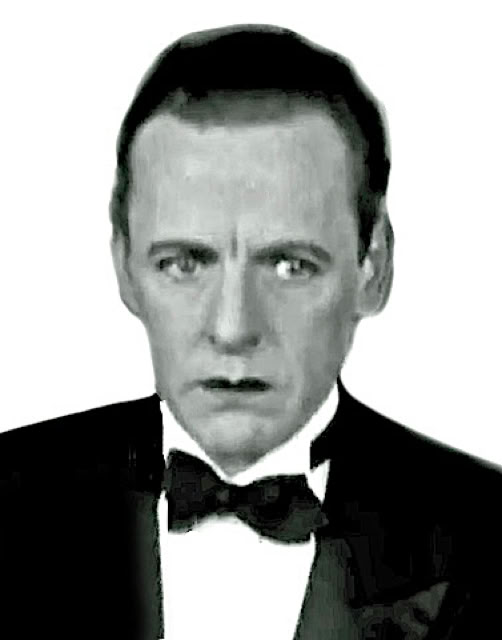
‍Most of the villains in Laurel & Hardy movies were either comedy characters (Billy Gilbert, James Finlayson) or snarling tough guys (Walter Long, Richard Cramer). Whenever a more legitimate approach was desired, Charles Middleton got the call. As the martinet Foreign Legion commandant in Beau Hunks, the grim welfare official in Pack Up Your Troubles, the outraged French artist in The Fixer Uppers, and again as the commandant in The Flying Deuces, Middleton made an excellent straight man for Laurel & Hardy’s antics.

‍Born in Elizabethtown, Kentucky on October 3, 1874, Charles Brown Middleton was a veteran of circuses, carnivals, and stage before entering the movies in the 1920s. He was tall and craggy, and his sharp features strongly resembled those of Abraham Lincoln. He impersonated Lincoln several times on screen, most memorably in The Phantom President, George M. Cohan’s musical-comedy feature of 1932; and The Road Is Open Again, a public-service short of 1934.

‍He came into his own, however, with the arrival of sound movies. Harold Lloyd had completed his silent feature Welcome Danger when talkies were sweeping the country, and Lloyd took the bold step of remaking the film with sound. For the new version he made cast changes, hiring actors with colorful voices. One of these was Charles Middleton, whose ominous voice and stentorian delivery established Middleton as a memorable villain.

‍Comedians often used Charles Middleton as a stern authority figure. He confronted Eddie Cantor (as a swami in Palmy Days), Wheeler & Woolsey (as a lawman in Caught Plastered), and The Marx Brothers (as a prosecutor in Duck Soup). He joined the Will Rogers stock company in 1932, appearing in six of the humorist’s features. He even played the Devil in a Technicolor M-G-M short. But his rugged, weathered face was more appropriate for outdoor adventure stories, and for almost two decades Middleton appeared in “A” and “B” westerns (the big ones included The Trail of the Lonesome Pine, Virginia City, and Jesse James.)

‍Middleton made his mark on popular culture with his portrayal of Ming the Merciless, interplanetary nemesis of comic-strip hero Flash Gordon in three popular serials for Universal. Middleton imbued what might have been a standard “yellow peril” menace with his magnificent theatrical voice, making Ming a larger-than-life figure with an exotic wardrobe and a neutral nationality. These serials have been in international distribution for decades, making Charles Middleton instantly recognized by much of the public today.

‍Middleton’s success in the Flash Gordon serials may have been his undoing as a major featured player in Hollywood. Once established as an over-the-top caricature, Middleton received fewer meaty character roles in important pictures. By the 1940s Middleton’s old-school villainy was less in demand, and he was growing older (he was already 65 when he made The Flying Deuces). So, along with other cinema veterans, he found more financially steady if less prestigious work in the low-budget field. By this time Middleton was being used more for his American-Gothic face than as a comedy foil, although he was reunited with Flash Gordon co-star Richard Alexander to terrorize The Bowery Boys in Spook Busters. In his later films Middleton often played small-town farmers, ministers, or sheriffs. When a jilted farmer’s daughter complains to her father about Bing Crosby in Road to Rio, it goes without saying that Paw is Charles Middleton.

‍Serial fans enjoy Charles Middleton as a favorite performer. Beginning in 1935 (with Tom Mix’s The Miracle Rider) he worked for all four major serial producers: Mascot, Republic, Universal, and Columbia. Typical of his excellent work is Republic’s Dick Tracy Returns; he plays the chilling Pa Stark, head of a murderous family (the male equivalent of Ma Barker). In 1943 Lambert Hillyer, a former colleague of silent-screen cowboy William S. Hart, was directing the Batman serial at Columbia. When a no-nonsense outdoorsman in the Hart mold was needed for a few chapters, Charles Middleton got the part. During the filming he was available for a guest appearance in a Three Stooges short, Spook Louder. Then he played a major role (a very rare, sympathetic one) as a sincere Indian agent in Columbia’s Black Arrow serial.

‍Middleton stayed with Columbia through 1947, making unexpected but welcome appearances in serials. His last serial was really an unexpected appearance: he had to substitute for another actor. Venerable performer Wheeler Oakman was cast as the lead villain in Jack Armstrong, but was too ill to continue, so Charles Middleton stepped in as the new villain. It was such a last-minute thing that Middleton never received any billing!

‍Middleton kept working in pictures until he suffered a fatal heart attack on April 22, 1949. He was 74.

‍Charles Middleton was a fine actor, and by all accounts a very nice man. He left a fine legacy for movie buffs.

‍Copyright © 2026 by Scott MacGillivray.
‍BEN TURPIN

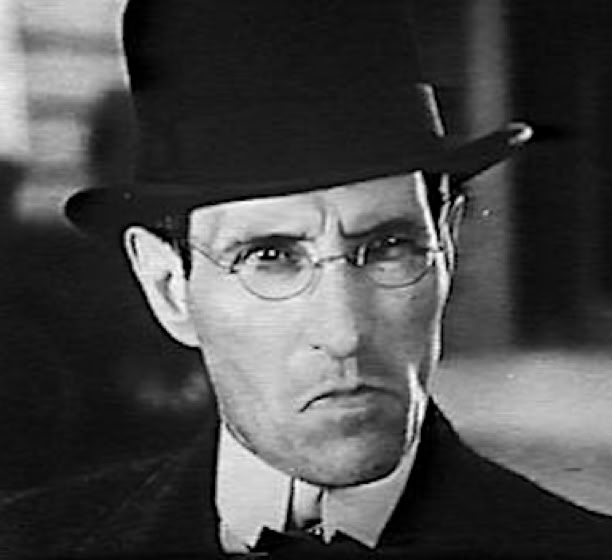
‍In the days of silent movies, when screen comedians were judged by their ability to do visual gags, Ben Turpin was a visual gag. His eyes were naturally crossed, and this distinction made him a movie star — and then a museum piece.

‍Born Bernard Turpin on September 17, 1869 in New Orleans, Louisiana, he went into show business in his teens, gaining comic experience in stage shows and circuses. His eyes were not yet crossed: he said this happened in his early twenties, after a slapstick stunt went wrong. In his thirties he was working as a janitor at the Essanay studio in Chicago, when the movie industry was still young and experimental. In 1909 the filmmakers started using him in front of the camera. When Charlie Chaplin came to work for Essanay in 1915, the company used Turpin as Chaplin’s second banana. Turpin disliked working with the exacting Chaplin, and Chaplin disliked working in wintry Chicago, so the partnership ended after three films. Chaplin returned to California while Turpin stayed behind. Essanay revived the “team” a year later by splicing new footage of Turpin into Chaplin’s Burlesque on Carmen, expanding Chaplin’s two-reel short into an extra-length attraction.

‍The exposure from the Chaplin films made Turpin a minor celebrity, and in 1916–17 he starred in a comedy series for the independent Vogue company. These undistinguished reels were reissued under different titles in 1920, when Turpin was a bigger name.

‍In 1917 Turpin was signed by Mack Sennett, who built the cockeyed character into a leading comedian. Turpin didn’t have much of a comic personality — he lacked the sentimentality of Charlie Chaplin, the ingenuity of Buster Keaton, or the innocence of Harry Langdon. But he had a gimmick: he was a living caricature. Sennett’s crew wisely cast Turpin in satires of dramatic epics, where all Turpin had to do was look ridiculous against the various rugged or romantic backgrounds. Turpin worked for Mack Sennett until 1927 and became the company’s leading star, earning $3000 a week. (He took a temporary leave of absence to care for his ailing wife during her last months.) By the late 1920s Sennett was extremely cautious about the short-comedy market; in 1928 he suddenly canceled most of his employees’ contracts and announced his studio’s conversion to sound. Exit Turpin.

‍The tiny Weiss Brothers studio, doing business as Artclass Pictures, tried hard to establish itself in the waning days of the silent film. Snub Pollard was already working there as a “name” comedian, and after Ben Turpin was released by Sennett, Weiss Bros. hired him. The star’s salary ate up a chunk of the low budgets — much of the action was filmed outdoors to save on interior sets. The resulting films prolonged Turpin’s career but didn’t advance it.

‍When the talkies arrived, they brought a new dimension of reality to the screen, and Ben was now a silly reminder of an earlier day. His speaking voice was a raspy tenor, not distinctive enough to complement his unique face. (Off-screen, Turpin betrayed his working-class origins, often spouting earthy, colorful language!)

‍Unlike most actors faced with professional eclipse, however, Ben Turpin didn’t need to work. His investments in real estate kept him solvent, and from 1929 he usually confined his movie appearances to nostalgic cameos and guest shots which exploited his crossed eyes for a quick visual joke (as in Laurel & Hardy’s Our Wife, made in 1931, or in Wheeler & Woolsey’s Cracked Nuts, also 1931, as a bombardier!). Turpin refused to surrender his “star” status; he insisted on receiving $1,000 per week for whatever jobs came his way, essentially making him the most expensive bit player in Hollywood. His largest role during the 1930s was in the Mascot serial The Law of the Wild.

‍Turpin’s best talkie is Keystone Hotel, Vitaphone’s 1935 attempt to revive old-time, pie-throwing slapstick. This successful two-reel comedy might have led to a series, but the studio refused to meet the aggressive salary demands of the stars’ agents, so Turpin withdrew from the Hollywood scene for a few years.

‍He returned to the screen in 1939 for the silent-screen tribute Hollywood Cavalcade, appearing as himself for a moment, in Technicolor. He made only one more film, as a visual punchline: in Laurel & Hardy’s Saps at Sea Turpin appears as a confused plumber for only a few seconds. Shortly after the film’s release, Ben Turpin died of heart disease on July 1, 1940. He was 70.

‍Ben Turpin is a rare example of a full-fledged comedy star gracing the supporting cast of a Laurel & Hardy comedy. Here’s “looking” at you, Ben!

‍Copyright © 2026 by Scott MacGillivray.
‍BOB BAILEY

‍You don’t think of “leading men” in a Laurel & Hardy movie. With Stan and Ollie as the center of attention, the male leads consisted of either a traditional “juvenile” role or an incidental romantic presence.

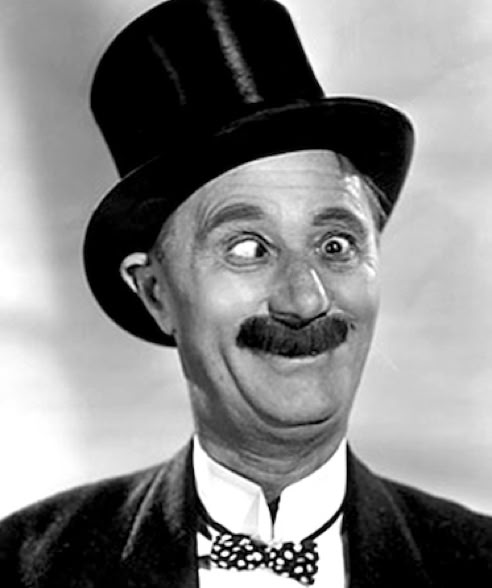
‍Only rarely did we see an actor who shared equally in Laurel & Hardy’s dialogue, plot situations, and comic routines. In the 1930s, it was Dennis King (The Devil’s Brother). In the 1940s, it was Bob Bailey (Jitterbugs and The Dancing Masters).

‍Robert Bainter Bailey was born on June 13, 1913 in Toledo, Ohio. Like Stan Laurel, Bailey was born into a show-business family and grew up in a theatrical atmosphere. He became a regular member of the Chicago radio community, with recurring roles in such shows as “The Road of Life," “Scattergood Baines,” and “That Brewster Boy.”

‍Bob Bailey answered the call from Hollywood in 1943, and broke into films opposite Laurel & Hardy in Jitterbugs. This was a remake of a 1933 Fox film called Arizona to Broadway, and Bailey took the featured role of “Chester Wright,” a worldly confidence man.

‍Bailey worked so well with Laurel & Hardy that he was assigned to their next film, The Dancing Masters. His role of “Grant Lawrence,” boy inventor, was neither as demanding nor as prominent as his work in Jitterbugs, but he tried his best with low comedy. In the aftermath of a ginger-ale-spraying sequence, Bailey’s half-sheepish, half-snarling “I got my pants wet!” is a comic highlight.

‍Bob Bailey had superb dialogue skills but limited visual “business”; his few moments of facial mugging in The Dancing Masters are amusing but mechanical, as though he was uncomfortable in broad comedy. 20th Century-Fox took the hint and turned him into “Robert Bailey,” promising young dramatic actor. Throughout 1944 Bailey had moderate to minor roles in five 20th Century-Fox features. He lacked the chiseled profile and rugged physique of the typical Hollywood leading man. His soft, boyish features were not the matinee-idol type. His talents, and especially his voice, were better suited to broadcasting, so Bailey returned to network radio.

‍In 1955 CBS Radio revived one of its popular detective series, “Yours Truly, Johnny Dollar,” and cast Bob Bailey in the lead. The role had been played in the hard-boiled gumshoe tradition by Hollywood actors Edmond O’Brien and John Lund, but Bailey brought new dimension and sensitivity to the tough-guy role. The Bob Bailey “Johnny Dollars” are among the most popular and collectible recordings of vintage radio.

‍In late 1960, CBS moved production of  “Johnny Dollar” to New York. Bailey, unwilling to relocate, was forced to relinquish the job. He kept busy writing TV scripts — the children’s adventure show “Fury” was an ongoing project — but his heart was in acting. Plans to bring “Johnny Dollar” to television were dropped when producers couldn’t reconcile Bailey’s colorful voice with his unimposing (5-foot-9, 150-pound) physique. Bailey made one more film appearance: he plays a reporter in the 1962 Burt Lancaster drama Birdman of Alcatraz.

‍After this film, Bailey suddenly withdrew from show business and settled into a solitary private life, apart from family and friends for many years. In the 1970s, reunited with his daughter Roberta Goodwin, he lived comfortably in a California suburb. Bob Bailey suffered a stroke in 1983 and passed away that year. He was 70 years old.

‍Bob Bailey was a skilled dramatic actor who made two funny movies almost by accident. We salute his contributions to the world of Laurel & Hardy.

‍Copyright © 1998 by Scott MacGillivray. Acknowledgment is made to John Gassman and Roberta Goodwin for background information.